

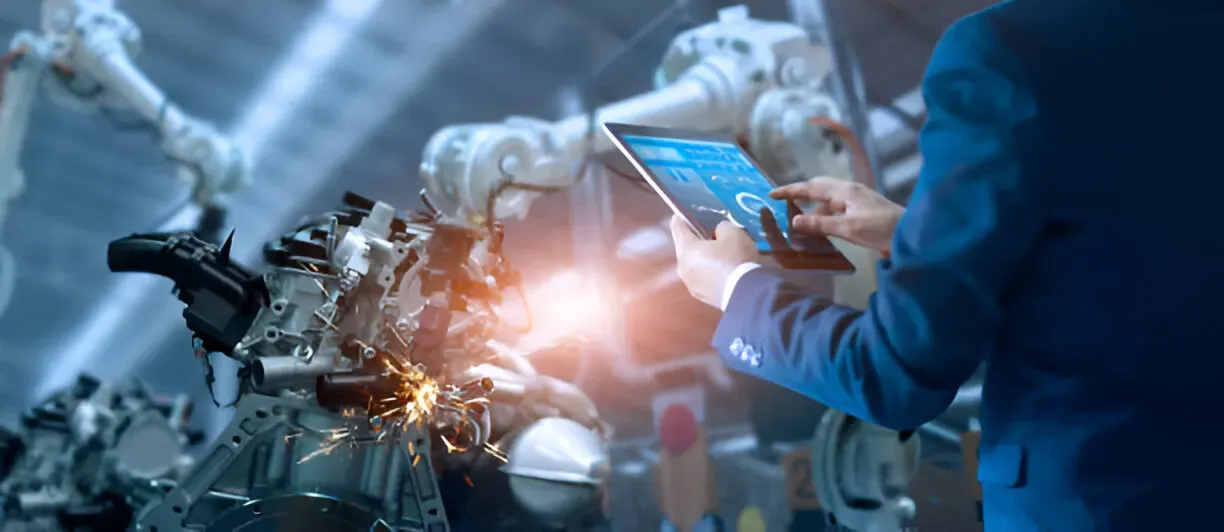
The landscape of global production is undergoing a profound transformation. Driven by rapid technological advancements, shifting geopolitical dynamics, and volatile consumer demands, manufacturing and assembly operations are moving away from rigid, legacy frameworks. Today, optimization in production is no longer just about maximizing output speed; it requires a delicate equilibrium between automated precision, human adaptability, supply chain agility, and waste elimination.
To remain competitive, organizations must look beyond traditional manufacturing silos and view production as an interconnected, data-driven ecosystem. This article explores the core methodologies, technological integrations, and operational strategies that define modern, high-efficiency production environments.
The Evolution of Production Paradigms
Production methodologies have progressed through distinct historical phases, each marked by a specific technological or philosophical breakthrough. Understanding this evolution is crucial for identifying where modern facilities can capture lost value.
Craft Production to Mass Production
Initially, goods were produced by skilled artisans. While the quality and customization were high, the volume was low and the cost per unit was prohibitive for the general public. The introduction of interchangeable parts and the moving assembly line revolutionized this dynamic. Mass production prioritized economies of scale, significantly lowering unit costs but sacrificing product variety and flexibility.
The Lean Revolution
Originating from the Toyota Production System, Lean manufacturing shifted the focus from raw volume to value creation from the customer’s perspective. Lean production identifies and systematically eliminates waste across all operational facets. Instead of pushing inventory through a system based on forecasts, Lean utilizes a pull system driven by actual market demand, minimizing excess inventory and associated holding costs.
Industry 4.0 and Smart Manufacturing
The current era, often referred to as Industry 4.0, integrates physical production machinery with digital technologies. Cyber-physical systems, internet of things devices, and advanced data analytics allow factories to become autonomous and self-optimizing. Production is no longer blind to upstream supply disruptions or downstream market fluctuations; it functions as a responsive, real-time node within a broader network.
Core Pillars of High-Efficiency Production
Achieving optimal throughput and quality requires a synchronized focus on several foundational pillars. Neglecting any single pillar introduces bottlenecks that can destabilize the entire manufacturing lifecycle.
1. Advanced Automation and Robotics
Automation has evolved past simple, repetitive tasks. Modern production lines utilize a mix of hard automation for high-volume, fixed processes and flexible automation for variable product mixes.
-
Collaborative Robots (Cobots): Unlike traditional industrial robots that operate behind safety cages, cobots are designed with advanced sensors to work safely alongside human operators. They handle ergonomic hazards, heavy lifting, or monotonous tasks, allowing human workers to focus on quality control and complex assembly.
-
Adaptive Automation: Machine learning algorithms allow automated systems to adjust their parameters in real time based on material variations or environmental changes, reducing machine downtime and scrap rates.
2. Digital Twin Technology
A digital twin is a virtual replica of a physical production asset, process, or entire facility. By streaming real-time data from sensors embedded on the shop floor to the digital twin, engineers can run simulations and predict outcomes before implementing physical changes. This capability facilitates:
-
Predictive Maintenance: Rather than adhering to rigid calendar-based maintenance schedules or waiting for a catastrophic component failure, operators can monitor vibration, temperature, and acoustic signatures to replace parts exactly when needed.
-
Virtual Bottleneck Analysis: Simulating shifts in production volume within the digital twin reveals exactly where machinery or labor constraints will develop, enabling preemptive reallocation of resources.
3. Sustainable and Circular Production
Modern production must account for resource scarcity and strict regulatory frameworks regarding environmental impact. Sustainable production emphasizes minimizing the carbon footprint of manufacturing operations and designing processes that support a circular economy.
-
Energy-Efficient Machinery: Upgrading to variable-frequency drives, high-efficiency motors, and smart lighting systems significantly reduces operational overhead.
-
Closed-Loop Manufacturing: This process ensures that waste material generated during fabrication, such as metal shavings or plastic trimmings, is immediately captured, reprocessed, and fed back into the production cycle.
Optimizing Shop Floor Workflows
The physical layout and operational workflow of a production facility dictate its inherent efficiency limits. Poor layout choices introduce unnecessary material handling, excessive transit times, and safety hazards.
Cellular Manufacturing vs. Functional Layouts
Traditional functional layouts group similar machines together, requiring materials to travel long distances between departments. Cellular manufacturing breaks these functional silos apart, arranging distinct machine types into self-contained cells designed to process a specific family of products from start to finish. This minimizes material transit time, reduces work-in-progress inventory, and improves team communication.
Standardized Work and Continuous Improvement
Efficiency cannot be sustained without standardizing the most effective methods known for a given task. Standardized work docs outline the sequence, timing, and specific motions required by an operator to complete a cycle. However, standardization is not static; it serves as the baseline for continuous improvement, or Kaizen. Operators are encouraged to identify inefficiencies in their daily routines, test modifications, and update the standard work documentation accordingly.
Supply Chain Integration and Production Planning
A production facility cannot operate in isolation from its supply chain network. Raw material shortages or transport delays immediately compromise assembly line utilization.
Enterprise Resource Planning and Manufacturing Execution Systems
Bridging the gap between corporate strategy and the shop floor requires seamless integration between Enterprise Resource Planning systems and Manufacturing Execution Systems.
The ERP handles high-level procurement, financial tracking, and customer demand forecasting, while the MES manages real-time execution on the shop floor. When these systems communicate fluidly, a shift in customer orders automatically triggers a recalibration of machine schedules, labor assignments, and material staging areas.
Mitigating Bullwhip Effects
The bullwhip effect occurs when minor fluctuations in retail demand cause magnifying oscillations up the supply chain, leading to severe inventory gluts or shortages for component manufacturers. Production managers counter this by establishing direct data-sharing arrangements with distributors and suppliers, relying on actual consumption data rather than historical projections.
Quality Management Systems in Modern Production
High throughput is worthless if it yields high defect rates. Total Quality Management and Six Sigma methodologies provide structured frameworks for driving defects out of the production process.
Statistical Process Control
Statistical Process Control utilizes control charts to monitor process metrics in real time. By tracking deviations from the mean, quality control engineers can differentiate between common cause variation (inherent system noise) and special cause variation (a specific malfunctioning tool or bad batch of raw material). This allows for intervention before products drift outside of acceptable tolerance limits.
Poka-Yoke (Mistake-Proofing)
Poka-Yoke refers to the design of mechanisms that make it impossible for an operator to commit an error. Examples include asymmetric parts that can only fit into a fixture in the correct orientation, or sensors that prevent a machine from cycling if a safety guard is improperly positioned or a component is missing. By preventing mistakes at the source, facilities eliminate the need for costly post-production inspection and rework.
+-----------------------------------------------------------------------------+
|                                                                             |
|      [IMAGE PLACEHOLDER: Modern Industrial Automated Production Line]        |
|      Width: 800px | High-resolution image depicting automated robotic       |
|      arms, synchronized conveyor systems, digital control panels, and       |
|      human operators monitoring processes in a clean facility.              |
|                                                                             |
+-----------------------------------------------------------------------------+
Frequently Asked Questions
What is the difference between production lead time and cycle time?
Cycle time is the amount of time it takes an operator or machine to complete a single defined task or produce one unit from start to finish. Production lead time, on the other hand, encompasses the entire duration from the moment a customer places an order to the moment the finished product is delivered. Lead time includes processing time, queue times, material handling delays, inspection, and shipping durations.
How does predictive maintenance differ from preventive maintenance?
Preventive maintenance relies on historical averages or manufacturer recommendations to service equipment at predetermined intervals, such as every six months or after a specific number of operating hours, regardless of the machine’s actual condition. Predictive maintenance uses real-time data from internet-connected sensors to assess the actual physical state of the machinery, scheduling service only when specific performance degradation indicators are detected.
Why do companies choose nearshoring for their production facilities?
Nearshoring involves moving production operations to a geographic country close to the primary market, rather than offshoring to distant regions. Companies utilize nearshoring to dramatically cut shipping transit times, reduce exposure to volatile geopolitical disruptions, minimize cross-border customs complexities, and ensure production teams share similar time zones for improved operational collaboration.
What role does work-in-progress play in manufacturing efficiency?
Work-in-progress represents partially completed goods awaiting further processing, assembly, or inspection. While some work-in-progress is necessary to buffer against minor disruptions between adjacent workstations, excessive levels clog floor space, tie up valuable working capital, mask underlying process bottlenecks, and increase the risk of product damage or obsolescence before final assembly is completed.
How do modern production facilities balance high customization with mass production?
This balance is achieved through mass customization, largely driven by modular product architecture and agile manufacturing technology. Companies manufacture standardized base platforms or sub-assemblies in large volumes to capture economies of scale. The final configuration or customization occurs at the very end of the production line, enabled by programmable automated machinery that can instantly switch specifications without requiring extensive retooling downtime.
What is Overall Equipment Effectiveness and how is it calculated?
Overall Equipment Effectiveness is a foundational metric used to evaluate how efficiently a manufacturing operation is utilized. It is calculated by multiplying three independent components: Availability (the ratio of actual operating time to scheduled production time), Performance (the actual production speed compared to the designed speed of the machinery), and Quality (the ratio of good units produced to total units started). A perfect score indicates a machine running at top speed with zero downtime producing zero defective products.
How do production managers determine the optimal batch size for manufacturing?
Determining optimal batch size involves analyzing the trade-offs between setup costs and inventory carrying costs. Large batches reduce the average impact of machine setup times per unit but significantly increase work-in-progress and storage costs. Small batches require more frequent setups but lower inventory levels and increase flexibility. Modern operations strive to implement single-minute exchange of die techniques to minimize setup times, enabling efficient production of smaller batches.