

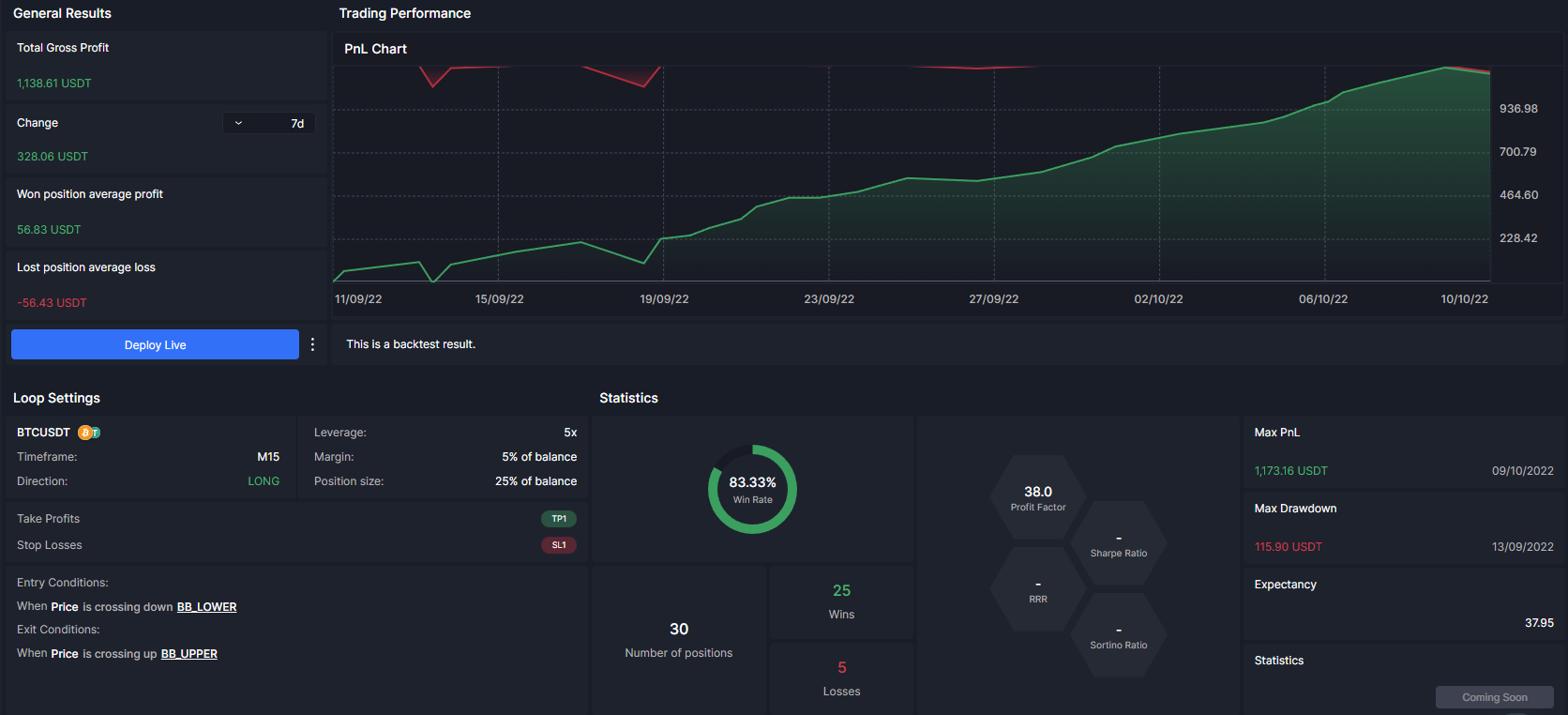
Backtesting is one of the most important tools investors and traders use to evaluate how an investment strategy might perform in real market conditions. By applying your strategy to historical data, you can estimate potential returns, risks, and weaknesses before committing real money.
This guide breaks down the fundamentals of backtesting, explains how it works, and shows you how to get started—even if you’re a beginner.
What Is Backtesting?
Backtesting is the process of testing an investment or trading strategy by applying it to past market data. The goal is to understand how the strategy would have performed historically and to assess its potential reliability.
A well-executed backtest helps you determine:
- Whether the strategy is profitable
- How volatile performance might be
- How the strategy behaves in different market conditions
- Whether it may need adjustments before implementation
Why Backtesting Matters
Backtesting is essential because it provides a risk-free way to validate ideas before investing real capital. It brings discipline and data into the decision-making process.
Key advantages include:
- Risk reduction: Avoid strategies that look good in theory but fail in practice
- Performance insights: Understand drawdowns, winning percentages, and average returns
- Refinement: Adjust strategy parameters for higher potential profitability
- Confidence building: Helps traders trust their system during live market fluctuations
How Backtesting Works: Step-by-Step
1. Define Your Strategy Rules
The clearer your rules, the better the backtest. This includes:
- Entry conditions
- Exit conditions
- Risk management (stop-loss, take-profit)
- Position sizing
2. Select Reliable Historical Data
You’ll need price and volume data at daily, hourly, or minute intervals depending on your strategy. High-quality data leads to more accurate results.
3. Apply the Strategy to the Data
A backtesting tool or platform executes trades based on your rules and historical market movements.
4. Analyze the Results
Evaluate insights such as:
- Total returns
- Maximum drawdown
- Sharpe ratio
- Win/loss ratio
- Profit factor
5. Optimize When Necessary
Adjust variables like timeframes or indicators—but avoid over-optimizing (curve-fitting), which can hurt real performance.
Popular Tools for Backtesting
Beginners can start with user-friendly software, while advanced users may prefer programming-based solutions.
Beginner-Friendly Platforms
- TradingView
- MetaTrader
- TrendSpider
Advanced Platforms (Coding Required)
- Python backtesting libraries (Backtrader, Zipline)
- QuantConnect
- Amibroker
Common Mistakes to Avoid
Backtesting can be powerful, but only when done correctly. Avoid these pitfalls:
1. Curve Fitting
Tweaking a strategy until it performs perfectly on past data often results in poor real-time performance.
2. Survivorship Bias
Excluding companies that went bankrupt or delisted can skew results.
3. Ignoring Transaction Costs
Real trading involves:
- Commissions
- Slippage
- Spread differences
These should be factored into your test.
4. Overlooking Market Conditions
A strategy successful in bull markets may fail in sideways or bear markets.
Best Practices for Reliable Backtesting
- Use long-term historical data covering multiple market cycles
- Include realistic assumptions for fees and execution
- Test across different asset classes when possible
- Validate with out-of-sample data (data not used during initial testing)
- Combine backtesting with forward testing (paper trading)
Is Backtesting Enough to Predict Future Success?
Backtesting provides valuable insights but cannot guarantee future performance. Market conditions evolve, and no model captures every variable. However, combined with sound money management and diversification, backtesting significantly improves the odds of building a robust investment strategy.
FAQs
1. Can beginners perform backtesting without coding skills?
Yes. Several platforms like TradingView and MetaTrader allow backtesting with simple, user-friendly interfaces.
2. How much historical data do I need?
The more, the better. Ideally, test across multiple years and market conditions to get a more realistic performance picture.
3. Is backtesting useful for long-term investors?
Absolutely. Long-term strategies such as factor investing, trend-following, or dollar-cost averaging can all be evaluated using backtesting methods.
4. How accurate is backtesting?
It’s accurate only if the data is reliable and assumptions are realistic. Ignoring fees or slippage can distort results.
5. What’s the difference between backtesting and forward testing?
Backtesting uses historical data, while forward testing uses live market data in a simulated environment (paper trading).
6. Can backtesting help identify risk levels?
Yes. Metrics like maximum drawdown and volatility reveal how much risk the strategy may carry.
7. Should I rely on one backtest before trading with real money?
No. Perform multiple tests with different settings and validate using out-of-sample data for better reliability.